$130K Debt Kept Me In A Toxic Job
What's really making your decisions
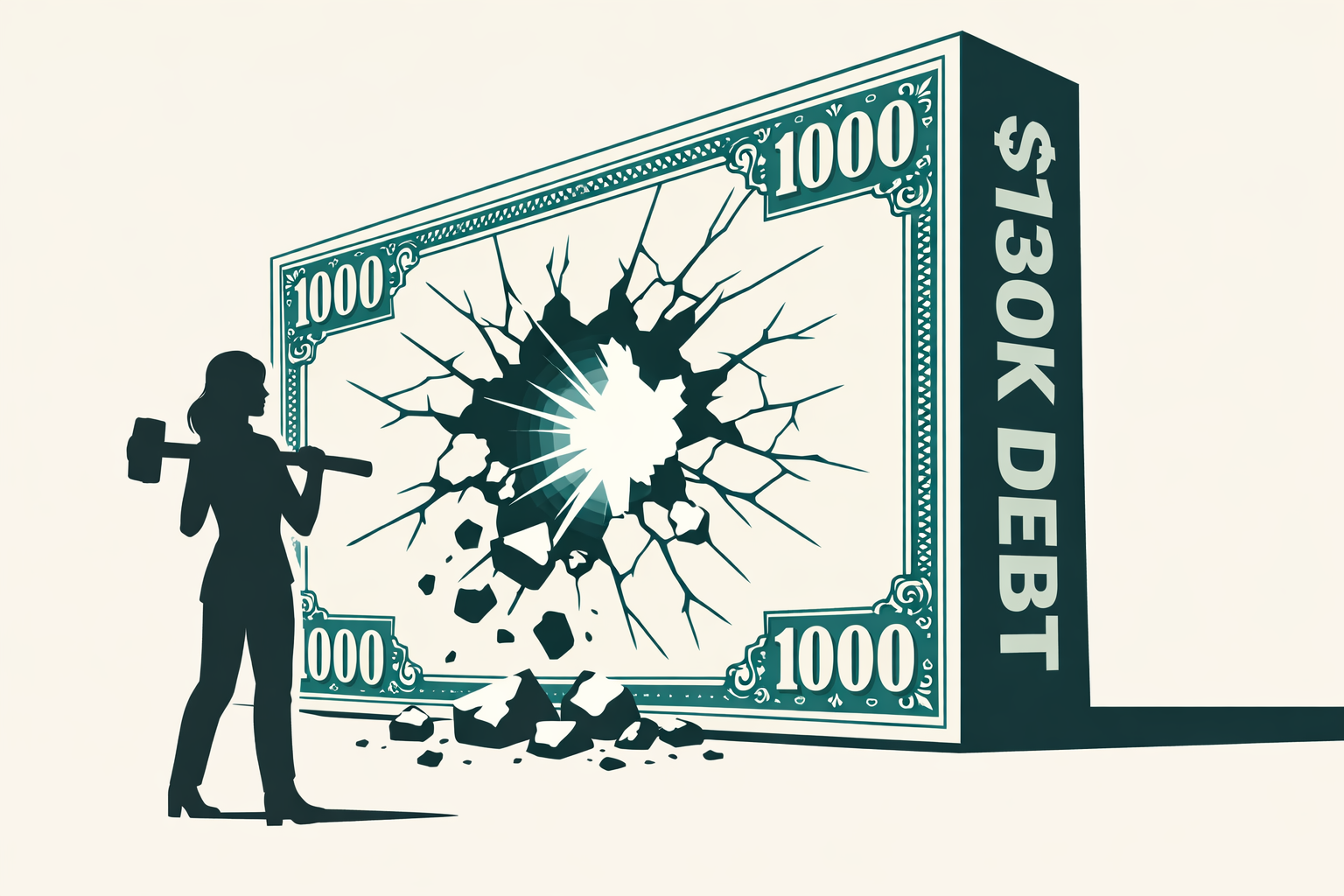
You’re not lazy. You’re not weak. You’re not bad at your job.
You’re stuck, and something else is making your decisions.
Maybe it’s debt. Maybe it’s a pension three years from vesting. Health insurance your family depends on. Or a voice in your head that said, “You’ll never find anything better," and you started to believe it.
Whatever it is, it’s in the driver’s seat. And you might not even know it.
Here’s what most people don’t see: the constraint isn’t a problem you’ll solve after you get ahead. The constraint is why you can’t get ahead. It’s making your decisions for you. Including the decision to stay in a toxic workplace.
I didn’t see the constraint either.
Staying made sense on paper. High salary. Annual bonus. 401K match, I couldn’t get anywhere else in the local area.
I wasn’t blind to the toxicity. Chest pains in traffic. A badge I wasn’t sure would scan each morning. Armor so thick I couldn’t feel anything anymore.
I knew the cost, and the math said stay.
Saturday lunch. I told my friend everything. The bad performance review that came out of nowhere. The micromanaging. The way my badge hadn’t worked that morning, my first thought was, “Did I get fired?”
He listened. Then he asked:
“When are you going to get off the X?”
In military contexts, the “X” marks the location where the enemy sets an ambush. The place you don’t want to be standing when things go wrong.
He was right. I didn’t argue.
But I was frustrated, not freed. I had debt. I looked at the whole number and saw no way out. Knowing I needed to move wasn’t the same as knowing how.
A few weeks later. Saturday morning. Third week of a Dave Ramsey course.
The instructor was talking, but I wasn’t hearing him anymore.
A voice cut through everything else. Not audible. Internal. For me, it’s the Holy Spirit. For you, it might be intuition, or gut, or whatever you call the thing that speaks when you finally get quiet enough to listen.
The voice said, “Pay off the student loan.”
I’d been looking at the whole number. The mortgage. The car. The student loans. All of it, one massive wall.
$130,000. A debt that started at $5,000 when I was eighteen, the first in my family to go to college, signing a promissory note I didn’t understand. It had been compounding for twenty-five years while I told myself more education would finally let me pay it off.
My friend had shown me I needed to move. This moment showed me what was holding me in place.
That was the constraint. Not all of it. That one. And that one I could attack.
Once I saw it, I couldn’t unsee it.
I traded my SUV for a compact sedan. I took on more teaching work. Then more. Until I was working eighty-hour weeks: up at 4 AM to swim, corporate job until 5, teaching until 10, and grading and prepping on weekends. For two years.
It was brutal. It was lonely. I don’t recommend it.
But on September 1, 2018, I submitted my final payment. The email came through: “Your loan is paid in full.”
For the first time in twenty-seven years, I was driving.
Two weeks later, the marketing department reorganized. I was reassigned to a director with a reputation for cruelty.
For ten years, I would have absorbed it. Armored up and stayed.
Not this time.
I walked into my boss’s office and handed in my resignation. Two weeks’ notice. No resentment. No guilt.
For the first time in my career, I had the upper hand.
The morning after my last day, I was home. No badge to scan. No building to walk into. No armor to put on.
The air smelled fresh. The sun looked brighter. The coffee tasted so much better.
Here’s what I couldn’t see while I was in it.
I kept thinking the debt was a problem I’d solve after I got ahead. I didn’t see that the debt was why I couldn’t get ahead. It was making every decision for me. Including the decision to stay and keep taking damage.
Debt. Pension. Health insurance. The fear that AI is reshaping your industry faster than you can adapt. The constraint changes. The trap doesn’t.
What I’ve learned from nearly two decades of research and hundreds of in-depth interviews with professionals who’ve been exactly where I was and you are:
The longer you stay in a toxic environment, the harder it becomes to see what’s holding you there. It’s not a weakness. It’s biology. Your survival mode narrows your vision. You stop asking what you want. You start asking what you can survive.
Until one day you’re telling yourself, “it’s not that bad,” while your body responds with chest pains and a jaw you can’t unclench.
You’re not broken. You’re stuck.
Here’s what changes when you finally see what’s driving your decisions.
You stop asking, “Is it really that bad?”
You start asking, “What specifically is holding me here? And can I attack it?”
That’s the shift.
I’m Rhonda. I have a PhD in organizational leadership. I’ve given a TEDx talk on toxic leadership. I’ve spoken at international conferences. But the credential that matters most to me is simpler than any of that: I’ve been where you are, and I found my way through.
If you’re new here, visit the Start Here page. It maps the five stages most people move through when navigating a toxic workplace and shows you where to find the resources that match where you are right now.